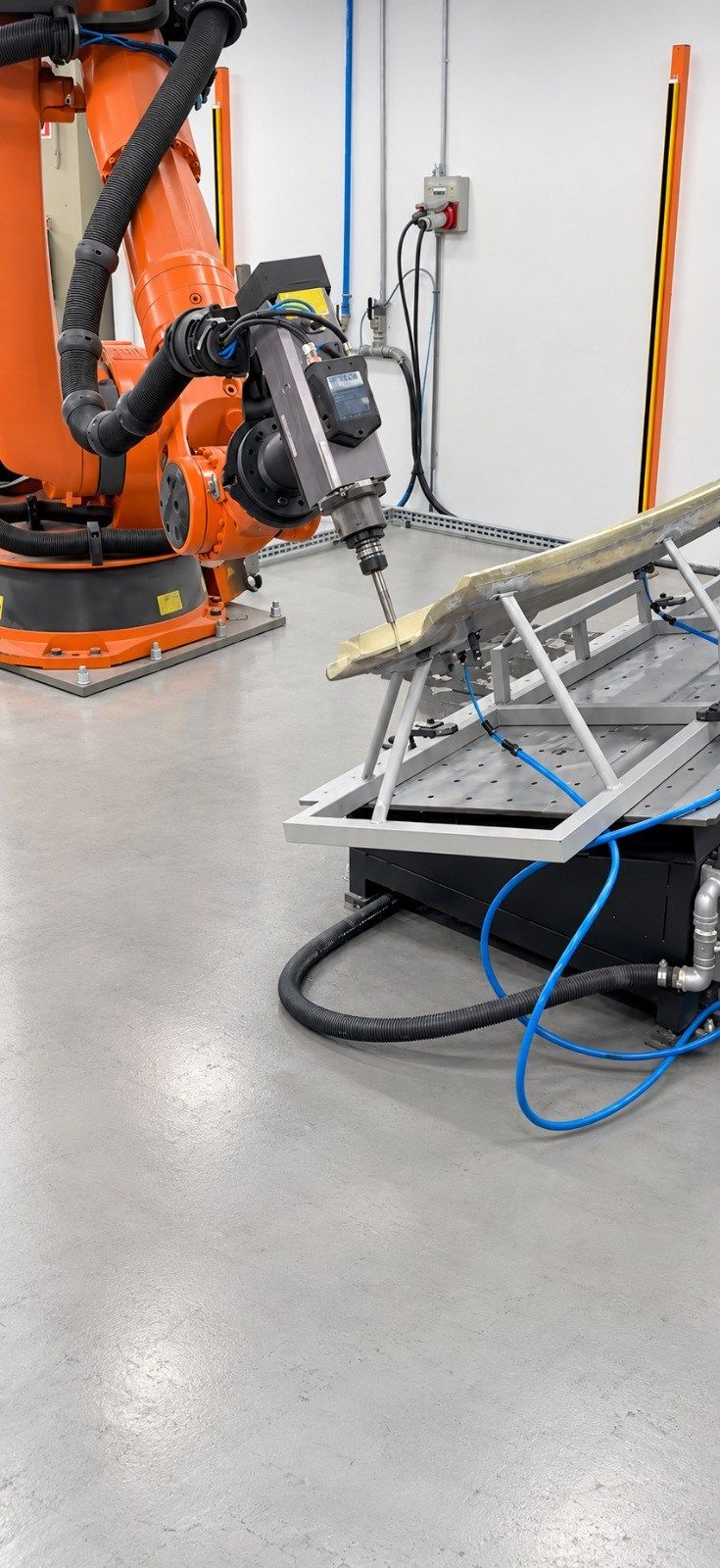
Compact
Robot, spindle, table and guarding in a small footprint.
The operator loads the part onto the fixture and the robot follows its contour, removing the excess edge along a path that repeats from cycle to cycle.
What it's for
For manufacturers who trim and deburr fiberglass, ABS, vinyl or thermoformed parts and want a consistent finish that doesn’t depend on the workforce of each shift. The operator loads the part onto the fixture and the robot follows the contour, removing the excess edge.
The robotic cell can have two stations to keep production moving, QR code part identification for quick changeovers, and perimeter guarding with light curtains to suit the operation.
Available configurations
Robot, spindle, table and guarding in a small footprint.
The robot works on one table while the operator changes the part on the other.
Methodology
Related case study
Two tables keep production moving: the robot trims on one while the operator swaps the part on the other.
Read the full case study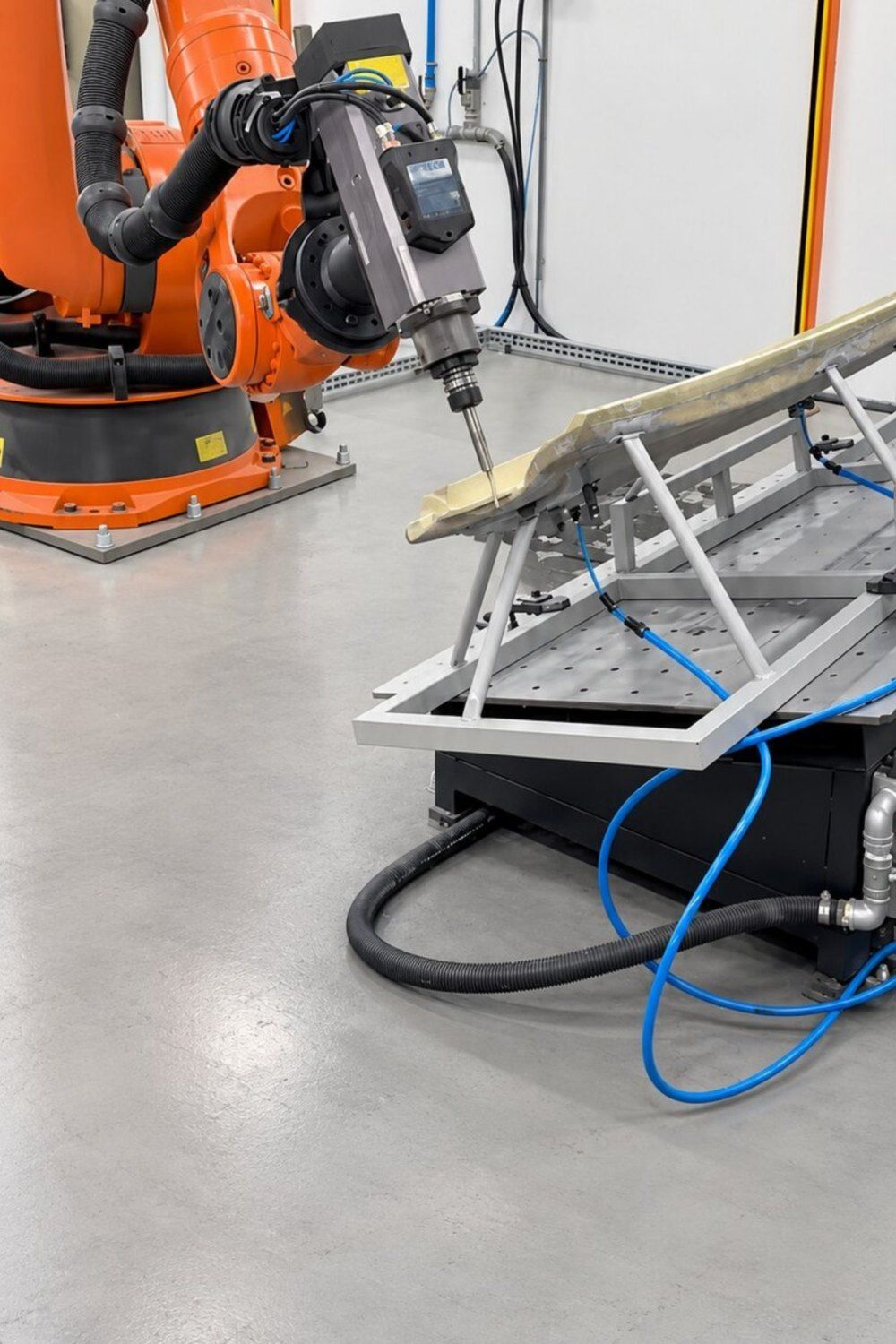
It brought a dramatic reduction in time and motion, significantly improving our productivity rates.

Frequently asked questions
Fixtures can carry a QR code. A reader identifies the part and the robot selects the matching program, with no need to reprogram the robotic cell.
In the two-station configuration, the robot trims on one table while the operator loads the other. Light curtains monitor each side in line with NR-12 (Brazilian machine-safety standard).
Yes. The compact configuration brings the robot, spindle, table and guarding together in a small footprint.
We work with fiberglass, ABS, vinyl and thermoformed parts. For other materials, feasibility is confirmed during the technical assessment.
Send us the 3D model or photos of your part. We reply within the same business day.